
Sandbach Flashes: birds and wildlife
About the Atlas
During the three breeding seasons 2004–06 and three winters 2004/05–2006/07, Cheshire and Wirral Ornithological Society (CAWOS) organised more than 350 volunteers to survey all of the county, trying to find every species of bird that was breeding or wintering
Great Tit Parus major
Breeding
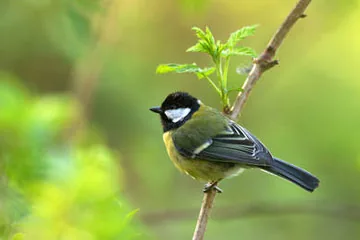
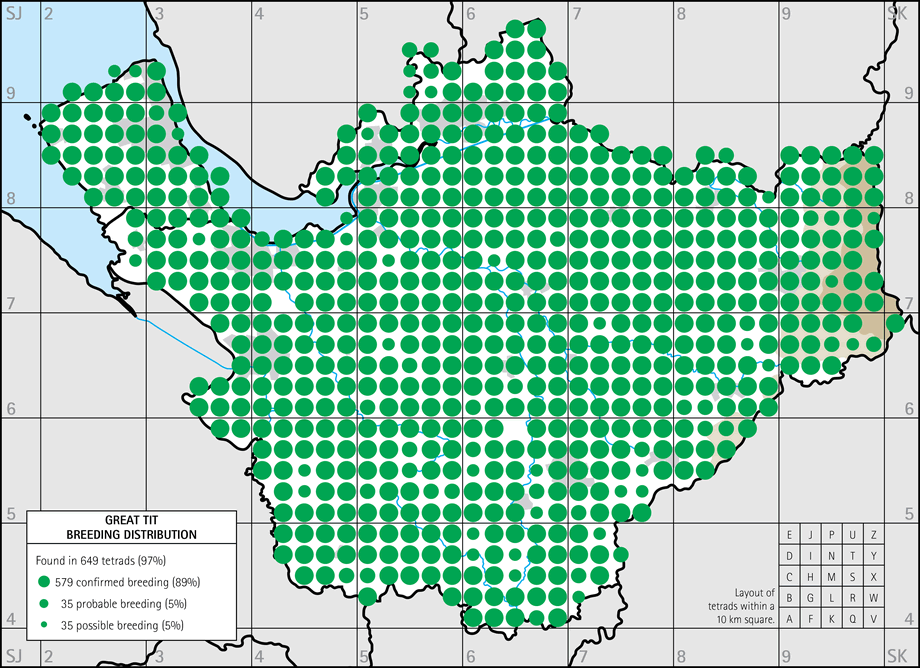
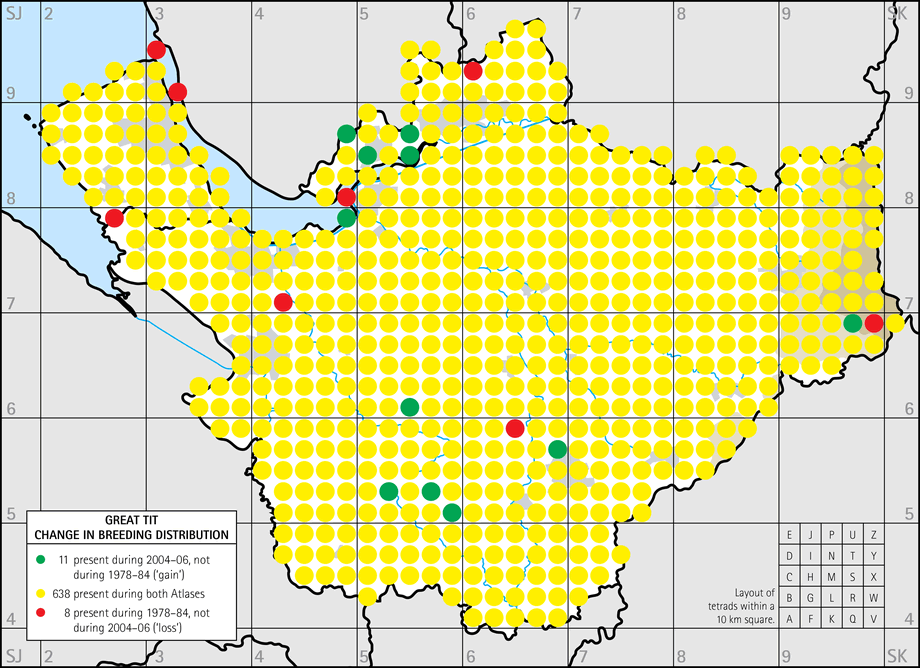
Great Tit is the eighth most widespread species across Cheshire and Wirral. This Atlas showed a very similar distribution to our First Atlas, with birds almost everywhere except for three of the highest-lying tetrads at the east of the county, Hilbre and the estuaries, and a handful of others where they were not found. This species’ division across the habitat classes was almost identical to that of Blue Tits. Most recorded habitats were woodland (374 tetrads) or human sites (333), with fewer in scrub (85 tetrads), hedgerow (129) and farmland (131).
This is an easy species in which to prove breeding (89% of records) and provided the third highest number of confirmed breeding records. Fieldworkers in 281 tetrads saw parties of recently fledged young, usually noisy and conspicuous as they pester their parents for food. Adults carrying food or a faecal sac were reported in 146 tetrads, but occupied or used nests were recorded in 22 tetrads, and a nest with eggs or chicks in 133. Nests were reported from natural sites including holes in oak, alder and birch trees, in numerous nest-boxes and a variety of others including an old Kingfisher hole in a stream bank, holes in walls, gate posts, telegraph poles, a road signpost and a metal lamp-post on Runcorn East station (SJ58K). These metal structures must suffer extremes of temperature, but chicks fledged from at least some of them. This is probably the species most likely to interrupt postal services by nesting in a post box, as Tricia Thompson reported from near Styal (SJ88H).
The BTO BBS analysis shows that the breeding population of Cheshire and Wirral in 2004-05 was 104,160 birds (87,940-120,430), corresponding to an average of about 85 pairs per tetrad with confirmed or probable breeding, and about 1.8% of the UK breeding population of 5.8 million birds (Newson et al 2008). Great Tits nationally have increased by about 22% in the twenty years since our First Atlas, probably encouraged by more provision of winter food in gardens and the lack of hard weather to knock them back.
The Great Tit is often said to be the most studied small bird in the world: their breeding has been followed for sixty years in woods near Oxford and for seventy years in the Netherlands (Perrins 1979, Gosler 1993). Their egg-laying dates are proving to be a sensitive and fascinating test of climate change. In Cheshire woodlands, they usually start laying in the second half of April, but can be somewhat earlier or later; Great Tits in gardens breed earlier but raise smaller broods. The laying date of British birds has advanced by about a week in the last forty years, in line with rising temperatures, but the date for emergence of winter moth caterpillars, the chicks’ main food, has not shifted as much. In the Netherlands, however, the opposite is true: caterpillar emergence is earlier and Great Tit laying phenology has stayed the same (Visser & Both 2005). In both cases the result is the same: they are increasingly struggling to find enough food for their brood.
Atlas account sponsored by Paul S. Lewis
Winter
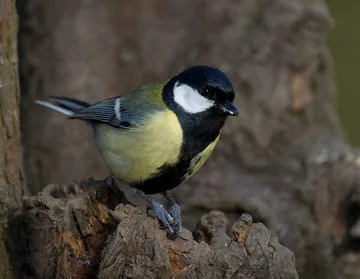
In autumn, Great Tits gradually shift in diet from invertebrates to seeds and fruit, so that by November, seeds such as beechmast and hazelnuts provide a major part of their daily intake. Many males remain on their territories year-round provided that they can find enough food, but most birds move into winter flocks that roam around a few hectares of feeding area. These two facts drive the species’ winter distribution and habitat use.
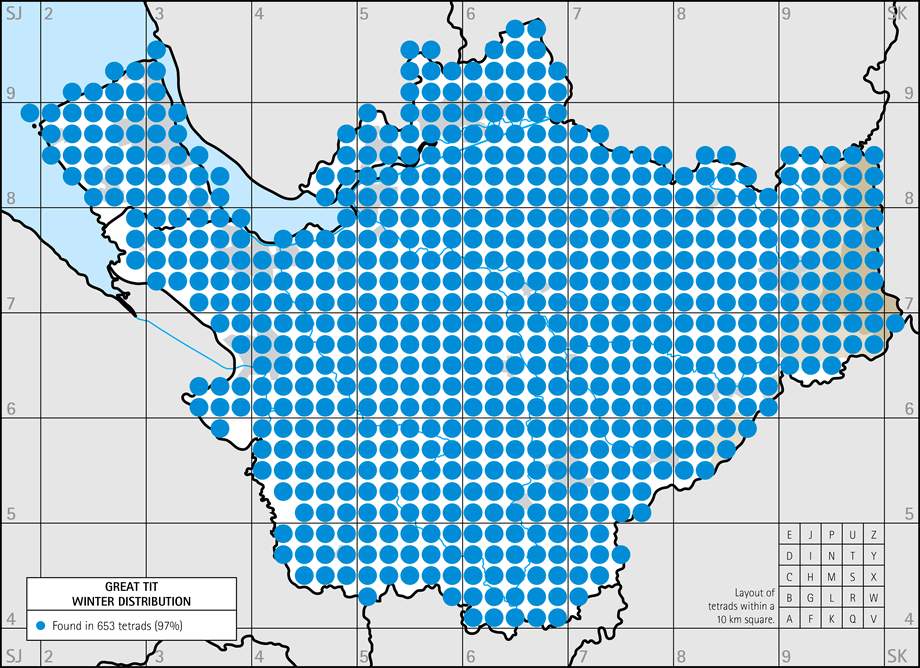
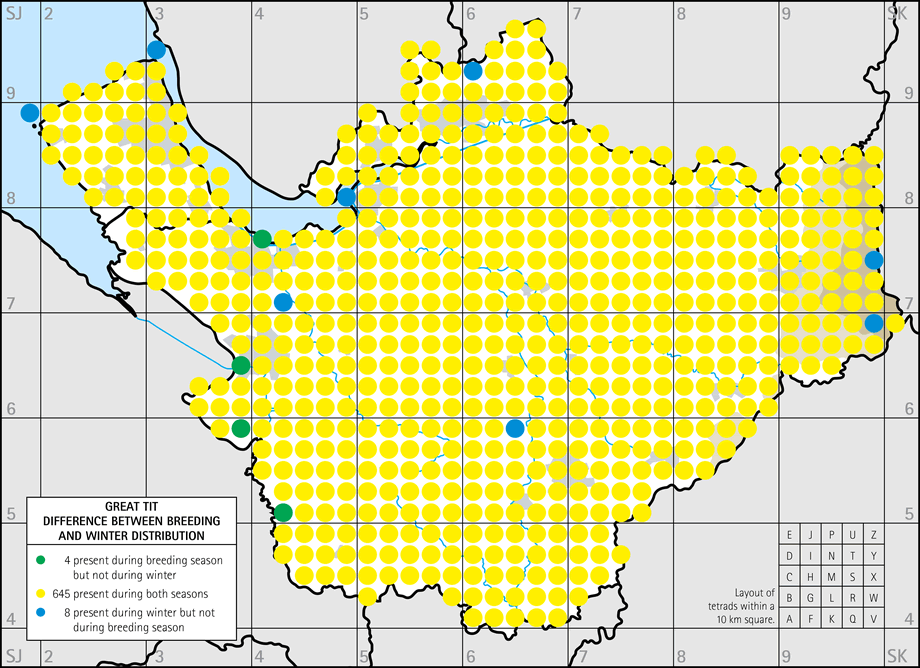
The winter map shows that Great Tits explore almost every part of the county, including the tetrads on the fringes – the highest hills and Hilbre – that do not support breeding birds. The habitat codes demonstrate slight reductions in the fraction of records in woodland and human sites, larger decreases in the proportions in scrub (8% in breeding season, 5% in winter) and farmland (12% in breeding season, 7% in winter) while the percentage of records in hedges more than doubled from 12% to 26%. These probably illustrate the species’ two main winter feeding areas, woodland and gardens, using hedgerows to move around.
Flocks form above all in hard weather, of which there was little during this winter Atlas, so most birds were found in small groups, with a median count of just three. The large numbers are mainly at well-stocked feeding stations close to woodland and, especially, in areas with lots of tree seeds. Great Tits are much more ground-feeders than their close relatives, and can gather into large flocks, especially when feeding on beechmast. I well remember trying to catch Bramblings feeding on the ground under beeches at Petty Pool (SJ66I) on 19 December 1992, but instead finding my mist-nets full with 98 Great Tits. They extract the kernel of beech nuts by making a characteristic neat hole in the side, and the woodland floor can be littered with such evidence. As supplies of nuts become exhausted during the winter, Great Tits move out of the beechwoods in the order of their social dominance: first to go are first-year females, then adult females, followed by first-year males and finally adult males (Gosler 1993).
As well as woodland seeds, the provision of food by humans is thought to be particularly important for Great Tits, which seem to be among the most intelligent of birds and can quickly learn to exploit new opportunities. An extreme effect of garden feeding was found in northern Finland, turning a migratory population into a sedentary one (Migration Atlas). Despite the dangers of feeding in British gardens, especially cats, Great Tits’ winter survival is higher in suburban areas than in woodland; but the best places to breed are in the woods, and birds have some tricky choices to make in deciding between, or moving between, the two (Gosler 1993).
Great Tits are generally sedentary birds, most males settling to breed within a few hundred metres of their natal site and most females within 1 km, but half of first-year birds move more than 4 km away during winter, tending to return as spring approaches (Migration Atlas). Some birds are already paired within the winter flocks, anticipating the breeding season.
Atlas account sponsored by Paul S. Lewis