
Sandbach Flashes: birds and wildlife
About the Atlas
During the three breeding seasons 2004–06 and three winters 2004/05–2006/07, Cheshire and Wirral Ornithological Society (CAWOS) organised more than 350 volunteers to survey all of the county, trying to find every species of bird that was breeding or wintering
Greenfinch Carduelis chloris
Breeding
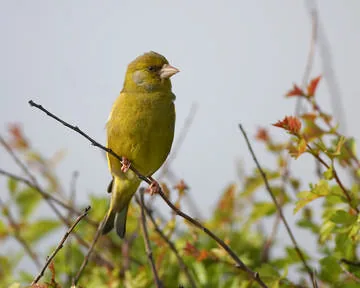
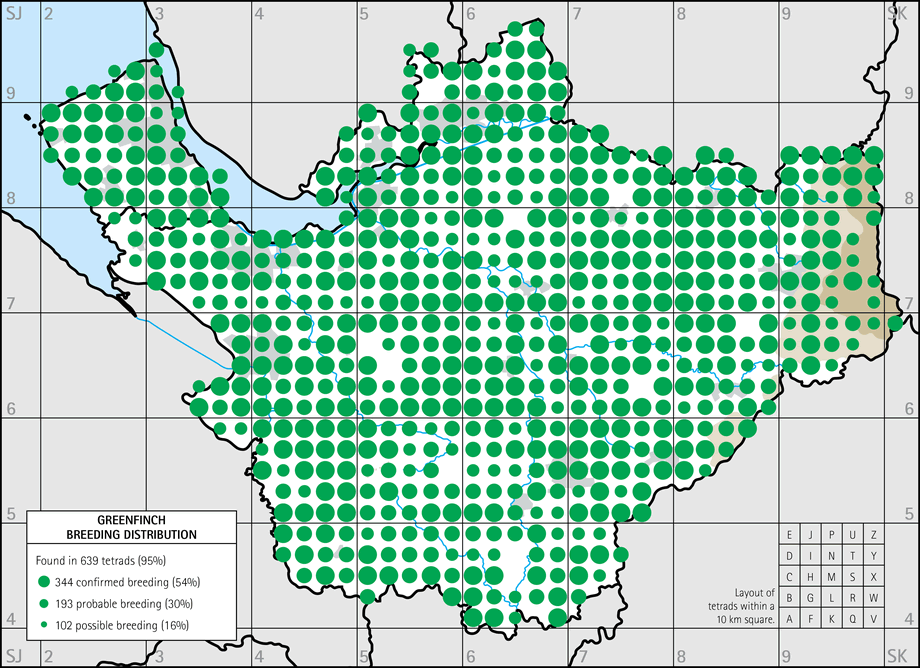
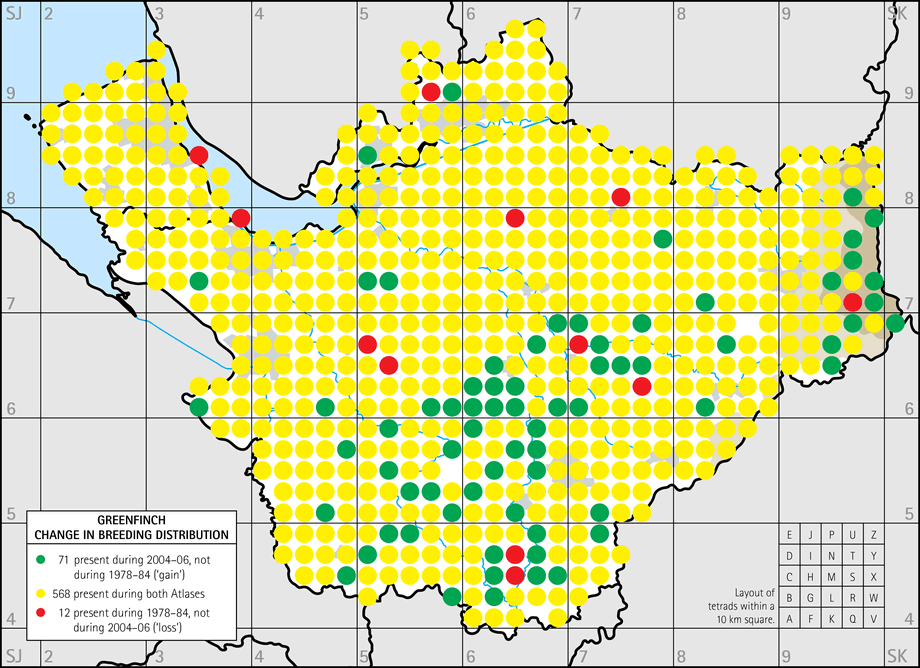
Greenfinches have expanded their range to fill in most of the gaps in their distribution at the time of our First Atlas, across all the agricultural region of southern Cheshire and most of the eastern hills. They were found in an extra 71 tetrads, with 12 losses, a net gain of 59 tetrads to become the eleventh most widespread species, present in 639 tetrads. It was also the eleventh most abundant according to the BTO’s analysis of Breeding Bird Survey transects, with a breeding population of Cheshire and Wirral in 2004-05 of 49,950 birds (38,170-61,720). This spread in their distribution probably reflects the national rise in population: the index is now 55% up on its low point, around the end of our First Atlas. Like most seed-eaters, Greenfinch populations dropped between the mid-1970s and mid-1980s, but their numbers fell much less than those of other species, only by about 20%, probably because they eat a much wider range of foods. The abundance map, as for Goldfinch, shows lower densities of Greenfinches in the more newly-colonised areas, with highest numbers in the north and west of the county.
The submitted habitat codes came mainly from human sites (43%) and farmland (34%), with 14% in woodland and 8% in scrub. As many as 27% of the records were from rural human sites (F3) and the surest way to find Greenfinches, on visiting a tetrad, was to go to the edge of a village, next to an overgrown hedgerow. The birds usually give away their presence with their monotonous wheezing calls, and often breed in loose colonies, with several pairs within a small area, all sharing the same feeding sites. Adult Greenfinches feed their chicks by regurgitating seeds, with small chicks getting a few invertebrates as well, and in 48 tetrads observers recorded adults taking food to, or faecal sacs from, their nestlings. Nests were recorded in 55 tetrads, a bulky construction usually deep within a hedge or thick shrub such as an evergreen, hawthorn or elder. Family parties with dependent young, accounting for 241 of the tetrads with confirmed breeding, are commonly found around the middle of June. Steve Hind reported birds at Higher Poynton (SJ98L) on 2 July 2006 that were feeding their young on cherries. Mean laying dates are as much as two weeks earlier than forty years ago, probably driven partly by climate change (Crick & Sparks 1999) and also facilitated by year-round use of gardens for feeding. April is usually the toughest month for Greenfinches, with highest adult mortality as natural food supplies are at their lowest, and provision of extra food for them can make a significant difference to survival and, if the adults are in good condition, allow an early start to the breeding season. Some individuals can be much earlier than the average – I found fledged young in Acton Bridge (SJ67C) on 7 May 2006 whose parents must have started nesting in March – and the products of late broods can still be in juvenile plumage into October or, exceptionally, November, as with a bird ringed in my garden (SJ57K) on 9 November 2005.
Atlas account sponsored by Brenda and Michael Arnold
Winter
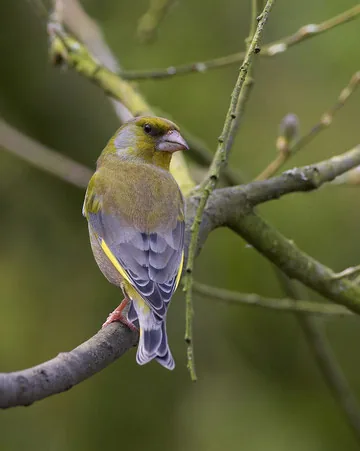
A century ago, Coward (1910) described the Greenfinch as an abundant resident and partial migrant, and wrote ‘in winter, though a few may be met with, it is scarce in most parts of Cheshire’. Migratory parties appeared from the beginning of March, and birds left again in September and October. At some stage they must have substantially shifted from being ‘scarce in most parts of Cheshire’ to their present status as one of our commonest and most widespread wintering species, but this change was not documented. Bell (1962) agreed that Coward’s summary adequately described the Greenfinch’s status although Boyd (1951) had called it ‘… one of the most plentiful birds in the district (around Great Budworth) throughout the year’, with flocks of hundreds of Greenfinches noticeable from November to February. Since Coward’s time almost two million Greenfinches have been ringed in Britain and Ireland and we now know that most of them are sedentary or make short movements up to 20 km, which might not be much farther than their daily foraging or roosting distances. Fewer than one-in-five birds moves more than 20 km, a clear difference from one hundred years ago. Some Norwegian birds cross to Britain, although few penetrate beyond the east coast, but some British birds move west or southwest for the winter and augment our resident population (Migration Atlas).
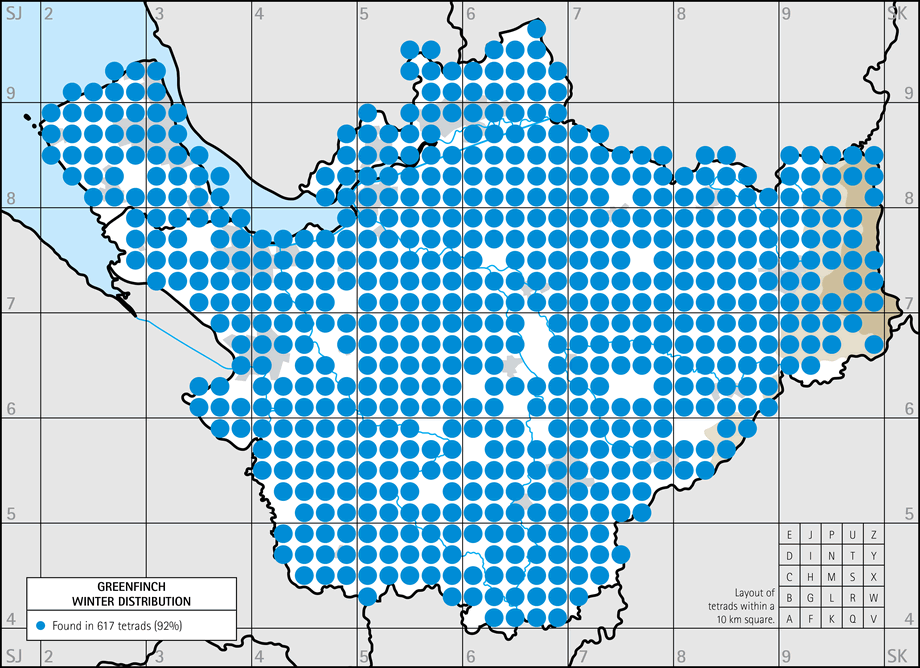
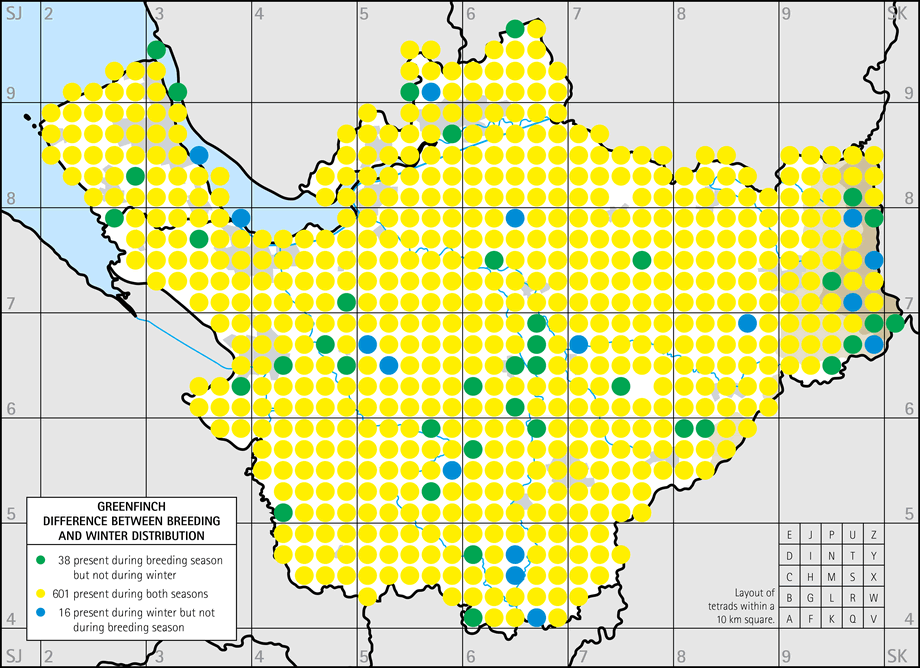
This Atlas survey shows Greenfinch to be the 14th most widespread species in winter in the county. The map shows them present in sixteen tetrads in which they were not recorded during the breeding season, but they were missing from 38, a net loss of 22 tetrads: these were scattered across the county and perhaps attributable to birds joining flocks outside the tetrad. They are scarce in the uplands (BTO Winter Atlas) and moved out of seven of the tetrads above 250 m, but on the other hand birds were found in four other high-altitude tetrads where they had not bred. Their recorded distribution across habitats was almost identical to the breeding season: human sites (45%), farmland (34%), woodland (14%) and scrub (8%). Their winter diet is seeds, especially those at the larger end of the size range such as rose hips, brambles and yew berries. In gardens they can dominate feeders and bird tables providing peanuts and sunflower seeds.
Most Greenfinches in winter join flocks, although many records were just of one or two birds, and the median count was three birds. Fieldworkers logged 24 feeding flocks of 50 or more, including seven flocks of 150 or more, with a maximum of 150-200 birds estimated by Chris Hancock at Whitley Reed (SJ68L). Communal roosts are a regular feature of Greenfinch behaviour in winter, but they were reported from only 16 tetrads. Three of them had flocks estimated larger than 100 birds, all in urban situations, found by Brian Martin in a holly tree in Warrington cemetery and by Colin Lythgoe in laurels in two different sites on either side of Crewe. Others were noted in yew, poplar and rhododendron and they will use any suitable bush or tree that provides sufficient shelter from wind and rain (Newton 1972).
Atlas account sponsored by Brenda and Michael Arnold