
Sandbach Flashes: birds and wildlife
About the Atlas
During the three breeding seasons 2004–06 and three winters 2004/05–2006/07, Cheshire and Wirral Ornithological Society (CAWOS) organised more than 350 volunteers to survey all of the county, trying to find every species of bird that was breeding or wintering
Pied Wagtail Motacilla alba
Breeding
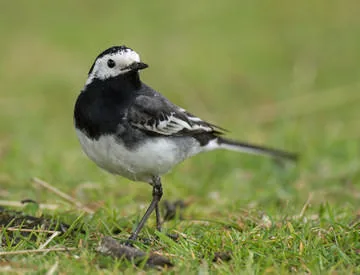
This is one of our most familiar commensal birds, both by sight and sound, its loud ‘chissick’ calls being unmistakeable, although the softer ‘chewee’ indicates a bird on territory. Its close link with man was shown by the submitted habitat codes: more than half of them were human sites, especially rural ones, with most of the remainder being farmland, mainly grassland. Pied Wagtails feed mainly on adult flies, which they catch by a combination of picking off the surface and flycatching near to the ground if their prey is disturbed into flight (Simms 1992). They noticeably gorge themselves, and feed their chicks, on temporarily abundant species such as mayflies and craneflies. This prey is most likely to be found on close-cropped grass, grazed farmland being ideal, or mown lawns, bowling greens, playing fields and other sports areas; open areas in man-made sites, such as roads, car parks and farmyards, also attract the species.
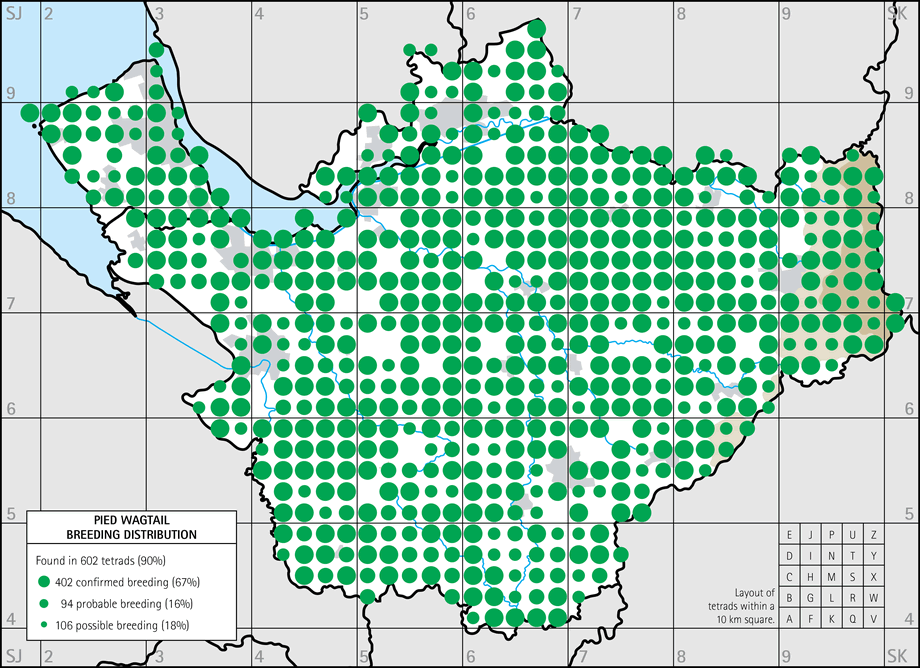
Breeding was confirmed in two-thirds of the tetrads with records, most of them by observers seeing recently-fledged chicks or adults carrying food. With two broods normal, they can be feeding chicks over an extended period, from early May to late July. The nests themselves, however, can be difficult to find and are usually well hidden on a ledge somewhere. Observers reported nest-sites in ivy and other climbing plants and in a variety of human artefacts including a pub window sill and canal lock gates. In the eastern hills dry stone walls offer plenty of nooks and crannies, and one pair was seen taking nest-material into the roof of the highest pub in Cheshire – the 'Cat & Fiddle' Inn – and later seen carrying food. Most sand-quarries have a pair, who can pick plenty of insects off the warm sand, and find a nesting site somewhere amongst the machinery or buildings. They are not deterred by human presence or by the noise and movement of machinery. One pair nested in 1989 and 1990 on a ledge under a sand-quarry weighbridge, raising six chicks each year as hundreds of heavily-laden lorries passed overhead during the four weeks of the incubation and fledging periods.
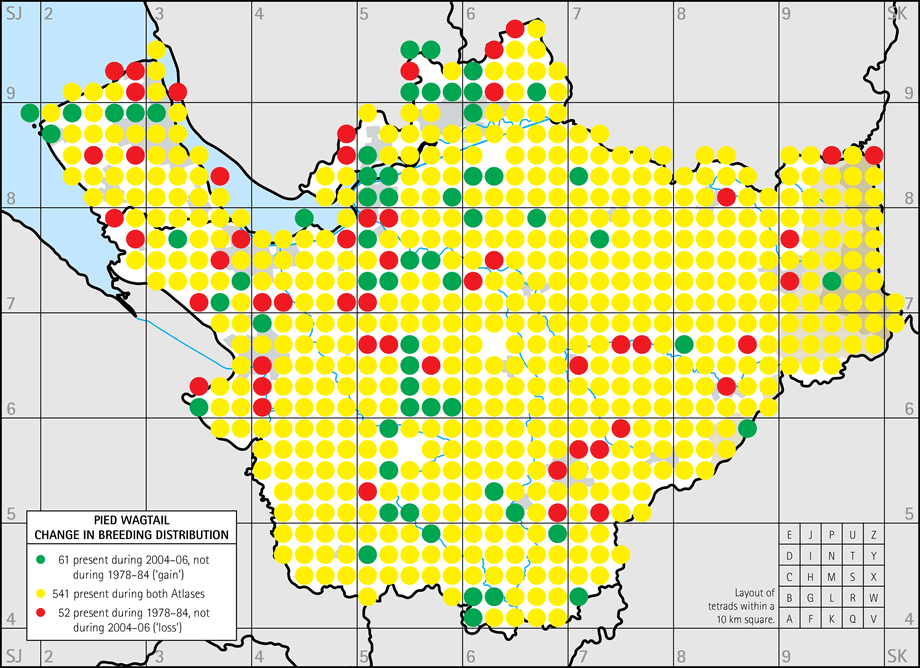
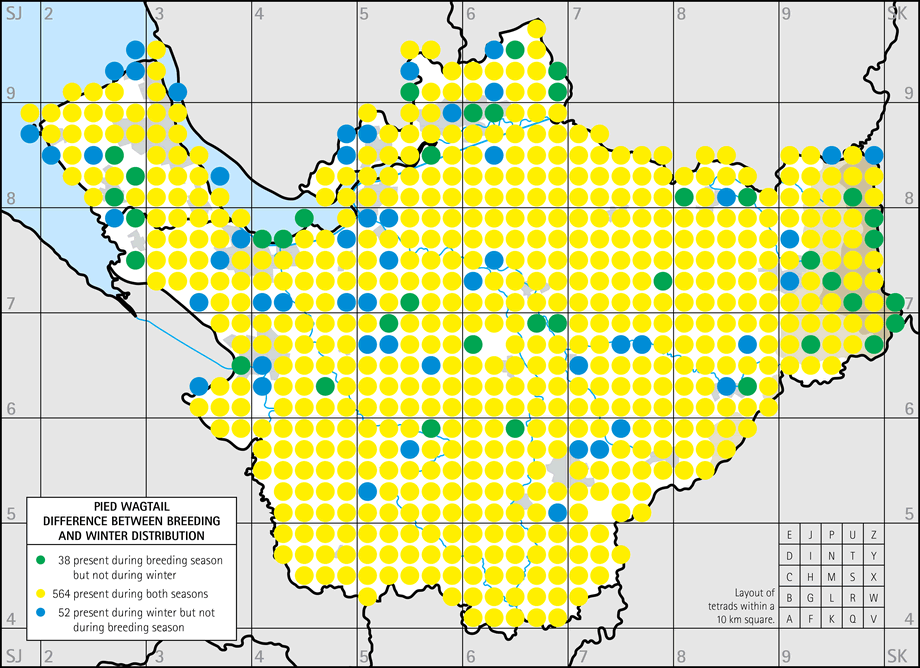
The monitoring schemes show that Pied Wagtails exhibit annual fluctuations in breeding population, especially being depressed by hard winter weather, but the national index is now at a similar level to that during our First Atlas. Their occupation of Cheshire and Wirral is similar to twenty years ago, despite the figures of 60 tetrads gaining and 63 losing the species. They have increased in a range of tetrads along the centre of the county, where they were thought to have been under-recorded in the First Atlas, and have spread more into the Mersey valley and north Wirral, including now breeding on Hilbre. There is no obvious pattern to the tetrads without breeding season records, although there are noticeably fewer tetrads with confirmed breeding in the eastern hills.
The BTO BBS analysis shows that the breeding population of Cheshire and Wirral in 2004-05 was 20,120 birds (7,020-33,230), corresponding to an average of about 21 pairs per tetrad with confirmed or probable breeding, or 17 pairs per tetrad in which the species was recorded. This is almost 2% of the national total, showing that Cheshire and Wirral is a favoured county for them.
Atlas account sponsored by Norman Scott
Winter
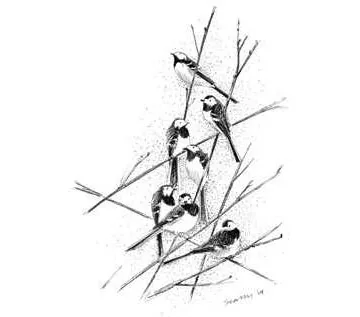
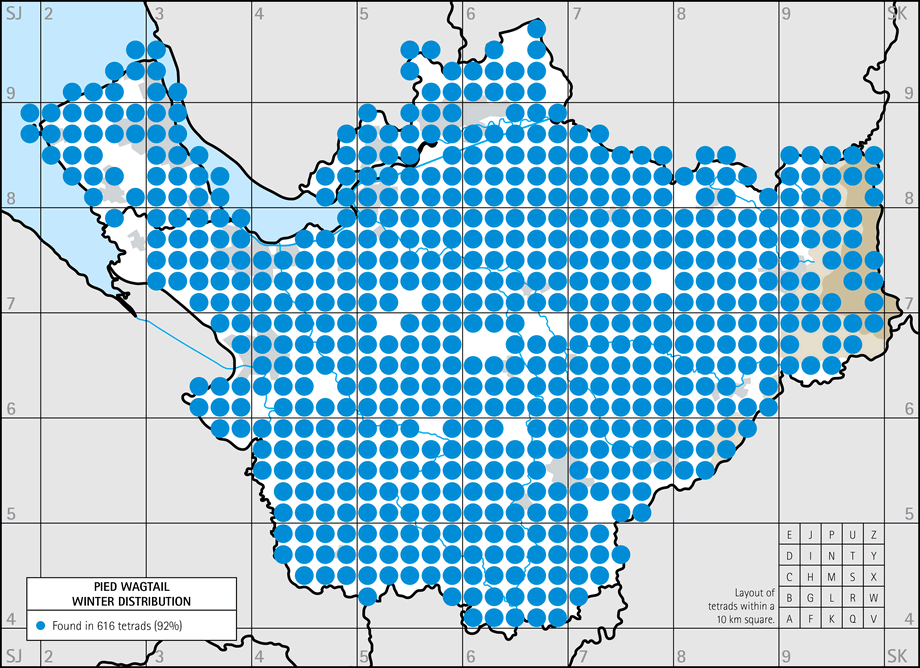
Pied Wagtails feed on insects all year round and have to be adaptable to achieve this. Some of our birds, especially the adults, stay close to their breeding areas while others, and many youngsters, move south, some as far as the Mediterranean. Meanwhile, our wintering population is augmented by arrivals from the north of some Scottish birds (Migration Atlas). They also retreat from the highest ground, and this is just evident in a few tetrads at the east of our recording area where they quit nine tetrads where they bred above 300 m. They appear to be missing from some of the most open areas at sea level as well: the Dee and Mersey saltmarshes, and parts of the Mersey valley mosses. Otherwise, the winter distribution is similar to that for the breeding season.
This map would surprise the earlier chroniclers of the county’s birds. Coward and Oldham (1900) knew the Pied Wagtail as a partial migrant, ‘only a few birds remaining through the winter’. In contrast to the present day, they commented that, especially during a frost, Pied Wagtails are numerous on the Dee marshes; the birds feed along the high water mark and resort to the gutters when the tide is out. Boyd (1951) mentioned ‘the comparatively few Pied Wagtails that winter here’, and Bell (1962) wrote that ‘relatively few birds remain through the winter’ and that ‘the numbers in most areas in winter are very small and widely scattered’. Unfortunately, the annual county bird reports give no indication when Pied Wagtails changed their winter habits to become common and widespread, as now. From 1964 to 1977 there were only three winter records published, two of feeding concentrations at sewage farms and one of a December roost in Wilmslow. A roost at Rolls-Royce, Crewe, drew comment in 1978 to 1980, then fieldwork for the national Winter Atlas (1981/ 82 - 1983/ 84) focused the attention of some observers. Pied Wagtails were found in all forty of the county’s 10 km squares, although one-third of them only registered the lowest (1-7 birds) category of abundance. In the cold winter of 1981/ 82 they were noted as being much more localised in rural areas than during the breeding season. From then on, winter records were published annually, mostly of totals at sewage farms and roosts and by 1992, when the annual bird report introduced a summary status line, the species was described as a ‘common widespread resident’, meaning 1,000 – 5,000 birds in winter. Pied Wagtails are susceptible to freezing weather, and presumably the milder winters since the late-1980s have allowed them to survive in the county.
As well as continuing to inhabit farmland, especially grassland and farmyards, wagtails move into gardens, and the Pied Wagtail is perhaps the most characteristic bird of sewage treatment plants, where insects are guaranteed. The winter habitat codes showed most birds (49%) in human sites (5% urban, 11% suburban and 33% rural); 41% on farmland, mostly grassland, and 7% spread across all types of freshwater types. Flying insects are scarce in winter, so their diet becomes beetles, spiders and invertebrate larvae, supplemented by occasional small seeds and breadcrumbs in human sites. They tend to flock in winter, but some, mostly males, establish linear territories alongside suitable watercourses. In midwinter, they spend 90% of the daylight hours feeding, taking an average of 18 items per minute. This feeding rate – one small insect every 3 or 4 seconds throughout a winter’s day – seems incredible but is only just sufficient for a bird to gain enough energy to sustain it through the night (Davies 1982). Perhaps in line with this territorial tendency, most birds were reported during this winter Atlas in ones or twos, but there were some large flocks in favoured feeding sites including eight feeding flocks of over 100 birds, including two each at sewage works and wet stubble fields.
This species is renowned for its urban winter roosts, birds gathering either on the flat roofs of large buildings, which presumably are warmer than the surrounding areas, or in dense evergreen bushes, with Laurel especially favoured, although sometimes wagtails roost on the bare branches of trees. Examples were reported during this Atlas of roosts in the town centres of Runcorn, Crewe, Alsager, Wilmslow and Macclesfield. They also have a liking for large building complexes in a mainly rural environment such as motorway service areas, Alderley Park, Daresbury Laboratory and Cheshire Oaks. Several of the larger roosts may number in three figures, with counts submitted of up to 300 in the regular roost around Crewe railway station (SJ75C), up to 200 in Macclesfield town centre (SJ97B) and 120 outside Runcorn Police Station (SJ57K) in January 2005. Their autumn reedbed roosts are seldom used into the winter period, presumably because they are too exposed for the long cold nights.
Birds of the nominate race, White Wagtails Motacilla alba alba, pass through on spring and autumn passage between their breeding grounds in Iceland and their normal wintering quarters in west Africa. In recent years a few have been noted in winter in Britain, including one during this winter atlas, a bird ringed at Prestbury Sewage Farm SJ87Z in winter 2005/ 06, with another possible White Wagtail seen in SJ37W.
Atlas account sponsored by Norman Scott