
Sandbach Flashes: birds and wildlife

About the Atlas
During the three breeding seasons 2004–06 and three winters 2004/05–2006/07, Cheshire and Wirral Ornithological Society (CAWOS) organised more than 350 volunteers to survey all of the county, trying to find every species of bird that was breeding or wintering
Treecreeper Certhia familiaris
Breeding
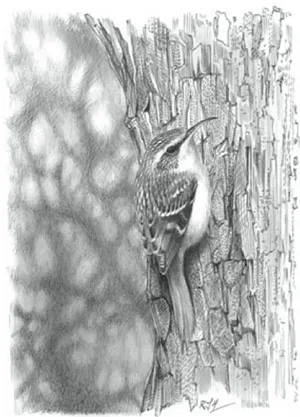
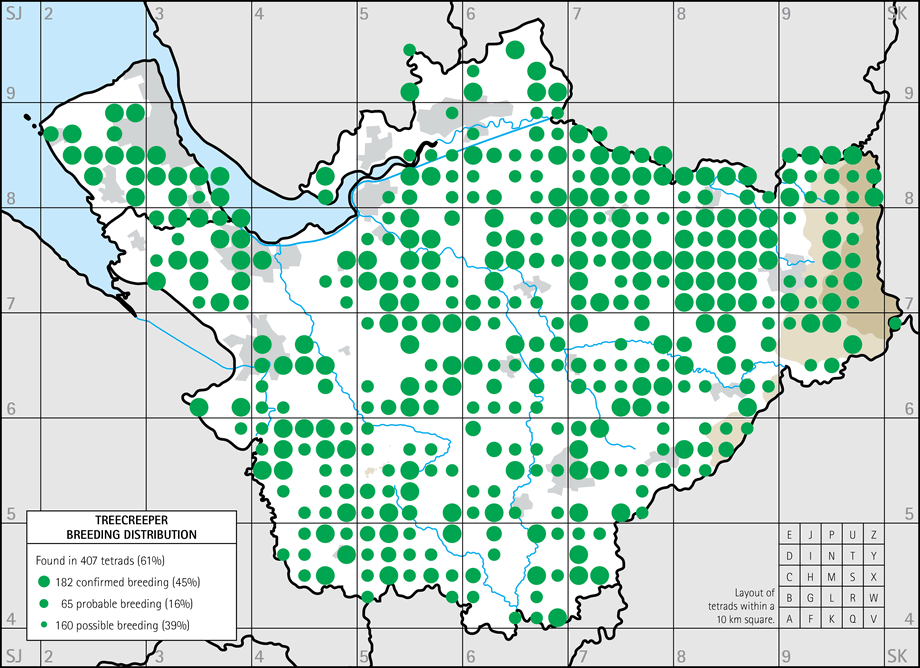
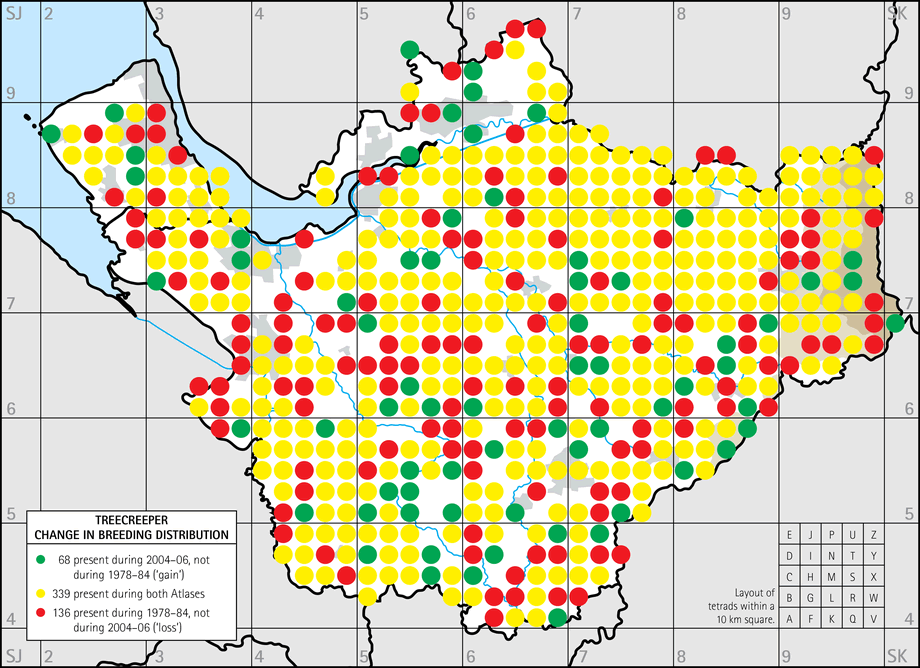
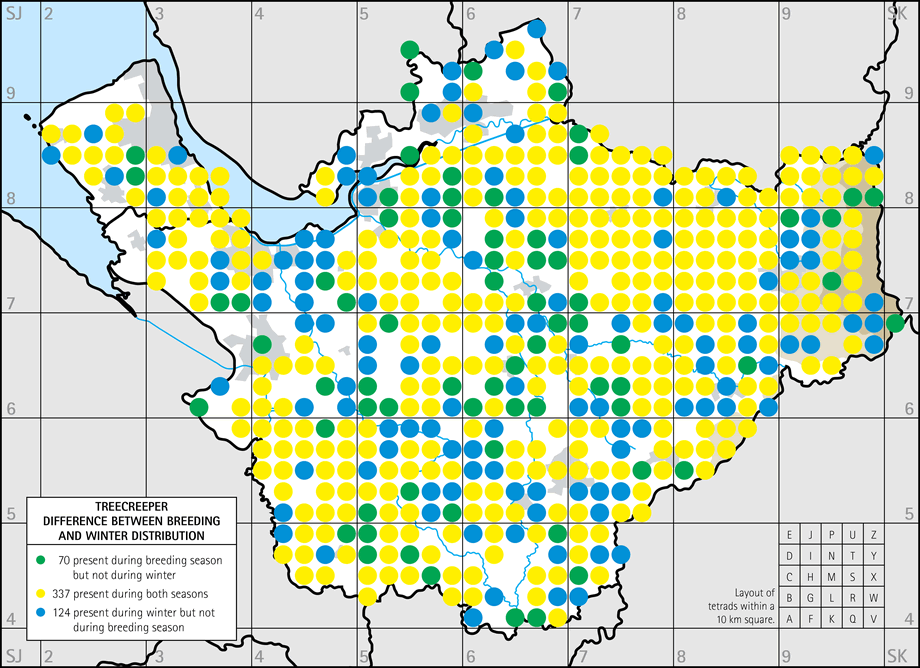
The substantial reduction in breeding Treecreepers was one of the surprises of this Atlas. From the total in our First Atlas of 475 occupied tetrads, this survey showed a drop of 68, with a much larger decline in those with confirmed or probable breeding, falling by 110 from 357 to 247. The ‘change’ map shows widespread gaps across rural Cheshire, with noticeable losses from several tetrads around Chester and Macclesfield (although they are always scarce in urban areas) and it seems that they have retreated to the core woodland areas, as also suggested by the abundance map. From the submitted habitat codes, 85% of tetrads with Treecreeper records contained woodland, almost all of them broadleaved or mixed, with 15 records of birds in carr (waterlogged) woods. This might overstate the importance of woodland: trees are essential, but they often use hedgerows with mature oaks.
There seems to be little in the national statistics to explain a drop in occupation of Cheshire and Wirral tetrads. The BTO’s population index has fluctuated somewhat, but the UK figure was at the same level in 2004 as in 1980. The BTO’s analysis of Breeding Bird Survey transects shows that the breeding population of the county in 2004-05 was 6,270 birds (2,700-9,850). This figure amounts to 2.0% of the UK breeding population of about 319,000 Treecreepers (Newson et al 2008).
This seems to have been one of the more difficult species for many fieldworkers to prove breeding, with 45% of tetrads yielding two-letter codes. In 62 tetrads, recently-fledged juveniles were found, often well-camouflaged birds packed side-by-side in a frozen attitude, vertical on a tree-trunk as they await the return of their parents. In 71 tetrads, birds were seen carrying food: often a bird carrying food could be watched climbing a tree-trunk, then apparently disappear as it slipped behind a broken piece of bark into the nest, and 49 nests were found. Oak and alder were the only species of tree reported, with several birds using nest-boxes, and Treecreepers successfully nested in bird hides at Hattons Hey (SJ57T), as they have done before, and for four years in succession (2002-05) at Doddington Pool (SJ74D). Previously, nests have been reported in bat-boxes, in beech and sweet chestnut trees and in a crack in an outbuilding wall at Inner Marsh Farm (CWBRs).
Treecreepers are well known for their feeding habits, starting at the bottom of a tree and working upwards in a spiral, picking insects from crevices in the bark. They especially eat spiders, but will take any insects that they find, and occasionally take wing to catch a small moth or other morsel flying past.
Atlas account sponsored by Tony Coatsworth and Gina Jones
Winter
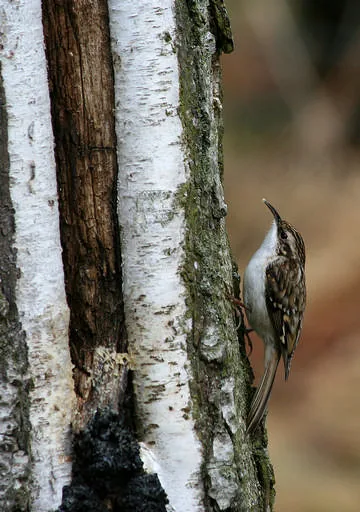
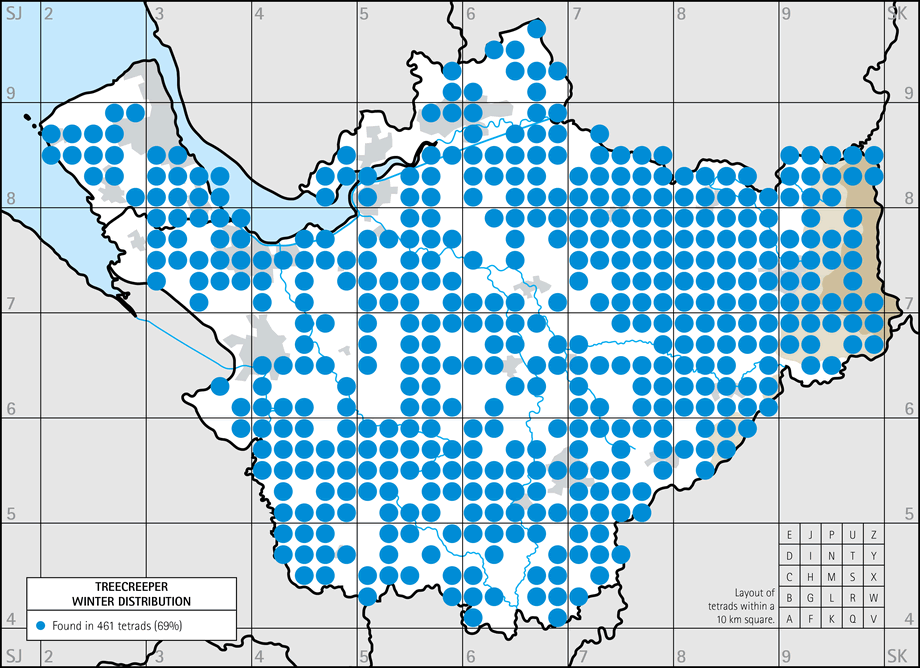
Although probably less obvious in winter, when they do not sing and seldom call, and thought to be under-recorded in winter (BTO Winter Atlas), Treecreepers were nevertheless found in 54 more tetrads than in the breeding season. The species is scattered widely across the county; areas occupied in winter only include a noticeable cluster in the lower Gowy valley (SJ46 & SJ47) and around Macclesfield (SJ97). Adult Treecreepers are thought to maintain their breeding territories all year round; these territories vary in size from 1 to 15 ha, a large area for a small passerine but only equivalent to a circle 440 m in diameter, and adults almost never move more than 500 metres (Migration Atlas). This, and their reluctance to cross open areas (BWP), vitiate the species’ colonisation of new areas. The birds found in winter but not in the breeding season are likely to be first-year birds dispersing from their parents’ territory. Examination of the winter habitat codes submitted show almost identical numbers in woodland (369 breeding season, 354 winter), but large increases in the figures for farmland hedgerows (from 23 to 63) and human sites (from 30 to 87), showing those birds spreading out from the core woodland areas into a wider range of habitats.
In winter, Treecreepers continue to search trees for insects and spiders, their long bill allowing them to probe where no other bird can, but also eat seeds, especially of pines and spruces. Within the last decade Treecreepers have started feeding on peanuts in hanging baskets at a number of sites scattered widely across Britain, in Devon, Buckinghamshire, Carmarthen and several Scottish counties, although this habit seems not yet to have been noted in Cheshire and it would be interesting to document its uptake. They sometimes associate with tit flocks, but usually feed solitarily, not often even with others of its own species. Out of the 724 records of Treecreeper submitted over the three winters, 328 included counts: 240 of them were of a single bird, with 70 records of two together, 12 records of 3 birds and six counts of four birds.
A fascinating aspect of Treecreeper behaviour is their occasional use of roosting holes which they excavate themselves in soft wood, including dead alder and, famously, redwood (Wellingtonia) Sequoiadendron giganteum trees. They usually make their roost-holes on the north-east side of the tree, away from the prevailing wind, a wise precaution since winter rainfall has been shown adversely to affect their survival (Peach et al 1995b). Such roosts have not been observed in Cheshire and Wirral – indeed during this survey there were no reports at all of roosting Treecreepers – but it would be an interesting little study to visit some of the county’s few redwoods to see if Treecreepers here have learned this habit.
Atlas account sponsored by Tony Coatsworth and Gina Jones