
Sandbach Flashes: birds and wildlife
About the Atlas
During the three breeding seasons 2004–06 and three winters 2004/05–2006/07, Cheshire and Wirral Ornithological Society (CAWOS) organised more than 350 volunteers to survey all of the county, trying to find every species of bird that was breeding or wintering
Tufted Duck Aythya fuligula
Breeding
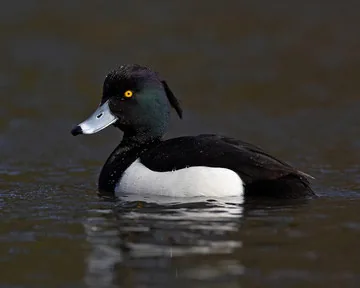
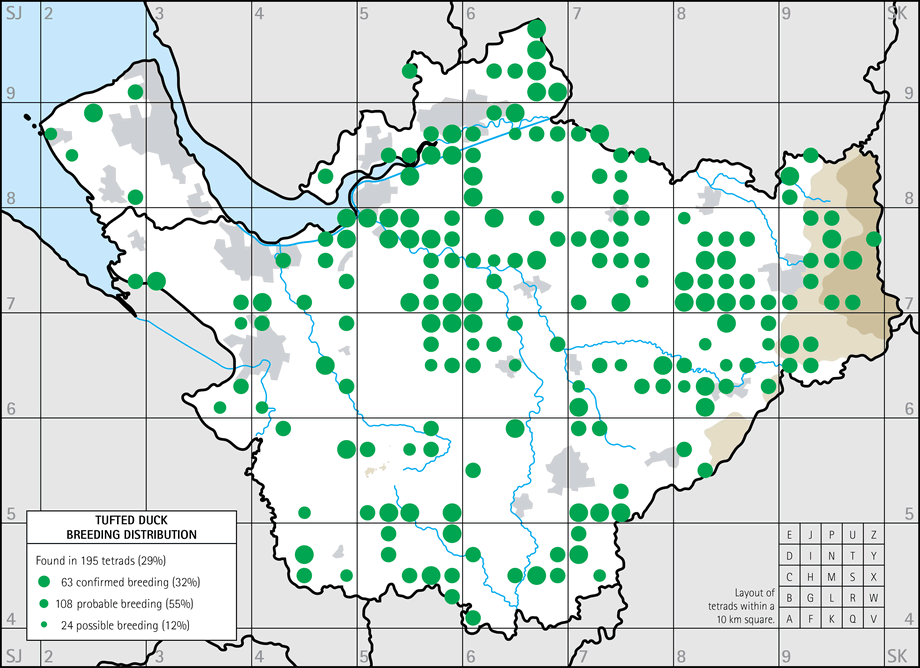
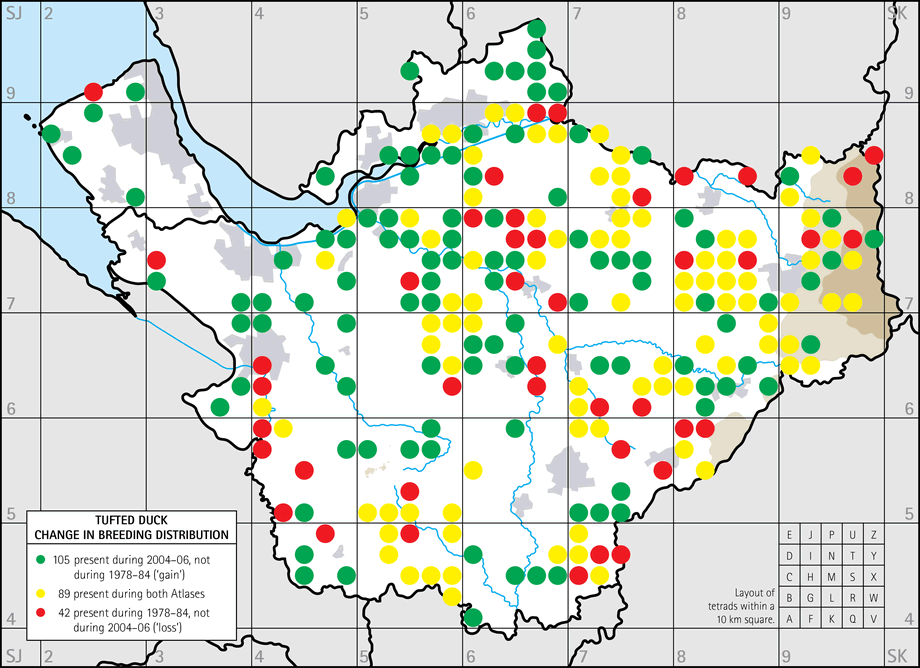
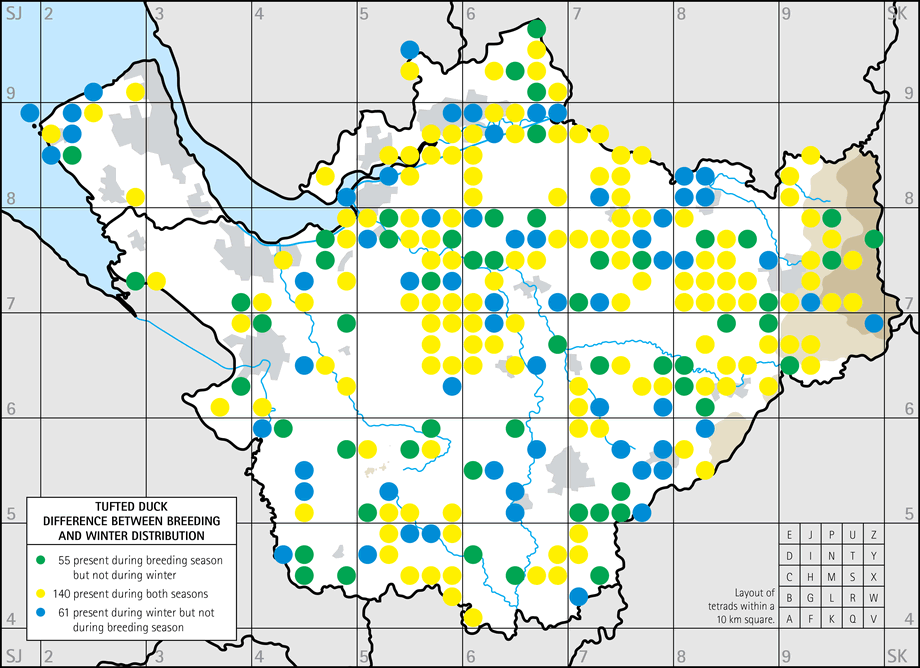
Tufted Ducks have expanded greatly since our First Atlas – in twenty years the number of tetrads with confirmed or probable breeding has risen from 108 to 171 – and there are now few waters of any size without the species. They were first proved to breed in the county only in 1908, with a slow expansion to 11 sites by 1938. Now, the distribution map shows that they are our second most widespread breeding duck and can be found almost anywhere in Cheshire, although only at a few Wirral sites. This is one of the few species of waterfowl that apparently thrives on the upland reservoirs of east Cheshire.
They need waters with rich bottom mud to provide the ducklings with abundant small larvae and emerging flies (Owen et al 1986). Although this seems like quite an exacting requirement, the submitted habitat codes for this Atlas show birds on every type of aquatic habitat, and it seems that the population expansion has included use of sub-optimal sites including a move onto some very small waters. Most (78%) of the codes were of small waterbodies, lakes or sand quarries, but 18 were described as ponds smaller than 50 m2 (G1) and 17 were on streams, rivers and canals, including even narrow streams and ditches.
It is very easy to prove breeding of this species by seeing a brood of chicks, chocolate-brown bundles of fluff, following their mother and diving for their own food as soon as they leave the nest. A surprisingly high proportion of records were sightings of a pair (probable breeding), however, perhaps attributable to fieldworkers not visiting tetrads later in the season after the eggs have hatched. In this late-breeding species, chicks are seldom seen before mid-June.
Tufted Ducks are widespread enough to be recorded on a number of BBS transects. The BTO analysis of BBS results shows that the breeding population of Cheshire and Wirral in 2004-05 is estimated at 1,270 birds (with 95% statistical confidence limits of 20-2,530). This figure gives an average of 7 birds per tetrad with confirmed and probable breeding.
From reports at well-watched sites there appear to be about half as many broods seen as the number of pairs recorded, perhaps an indication of the level of nest losses. Some large breeding totals have been included in the annual county bird reports: 12 broods at New Platt Wood SQ (SJ77K) in 1994, 10 broods at Doddington (SJ74D) in 1995 and 8 broods at Inner Marsh Farm (SJ37B) in 1997. At Woolston (SJ68P) there were at least 16 broods in 2004, a record 27 broods in 2005 and 22 broods in 2006. Tufted Duck broods typically contain 7-9 chicks, but observers often comment on their rapid depletion, attributed to predators including mink, pike and Lesser Black-backed Gulls.
Atlas account sponsored by Michael Thompson
Winter
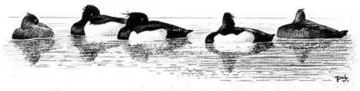
The Tufted Duck is separated ecologically from other diving ducks by having a largely carnivorous diet, mainly molluscs. They find most of their food on the bottom of lakes, and some rivers, up to 5 m deep, diving frequently, typically twice a minute for 15-20 seconds at a time, although males dive deeper than females and stay submerged for longer than females (Owen et al 1986).
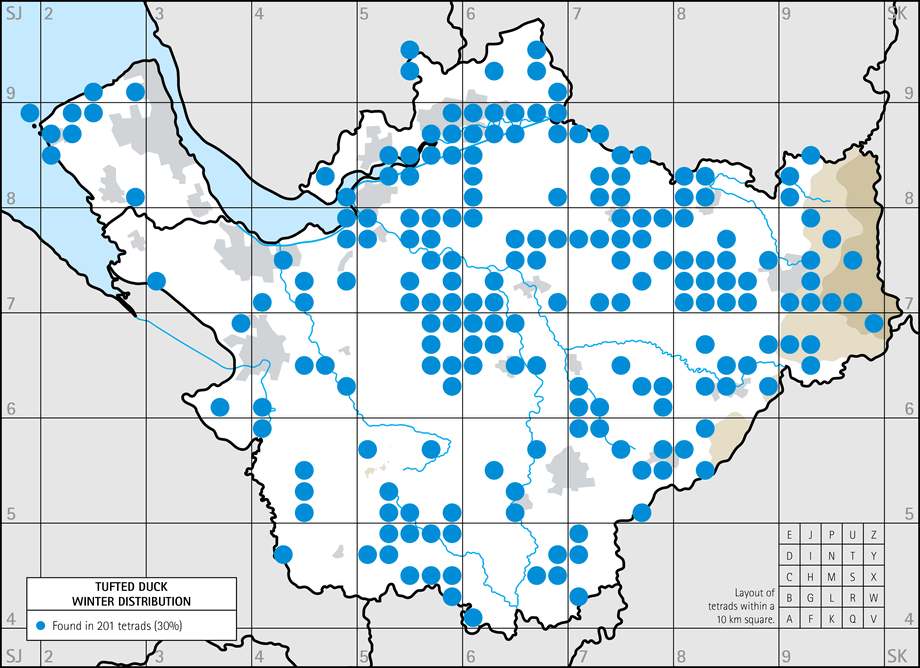
Despite these apparently quite precise requirements wintering Tufted Ducks are widespread in the county, appearing on almost one-third of tetrads, twice as many as Pochard. They achieve this largely by being able to exploit smaller waters: more than 30% of birds were on ponds or small waterbodies, and 9% of records were on flowing waters, rivers and canals. The largest flock in the county, up to 500 Tufted Ducks, is at Woolston, often on the river Mersey rather than on the dredging deposit beds themselves. As with Pochard, Tufted Ducks seldom use our estuaries.
Tufted Ducks breeding in Scotland mostly move to Ireland for the winter, with a small proportion to our area as well; by contrast, those from southern England largely stay within England, with some flying to the Netherlands and some cold-weather movements to Ireland (Migration Atlas). The behaviour of the breeding birds and their offspring from Cheshire and Wirral, lying in between, is not known. Most of the Tufted Ducks in Britain in the winter are visitors from more northerly latitudes in Fennoscandia and European Russia. A bird ringed as a chick in Latvia in 1977 was shot in Cheshire in January 1982, and adult birds trapped at Rostherne have been reported from as far north as Lapland and as far east as the River Ob at 65ºE, beyond the Ural mountains in Siberia (Wall 1982). One bird ringed at Rostherne was recovered in Iceland; Icelandic breeding birds mainly winter in Ireland, but some mix with the others in Britain. Once here, birds may well move around between sites, but two-thirds of known movements within a winter are short-distance, less than 20 km (Migration Atlas).
The British wintering population of Tufted Duck has been increasingly slightly for many years, and is now around 90,100 birds (Banks et al 2006). Nowhere in the county holds nationally important numbers, only Woolston coming at all close with figures of 600-700 birds. Other sites with three-figure winter counts during this Atlas included Rostherne Mere (SJ78M), the Chelford SQs (SJ87B), Redesmere (SJ87K), the Cholmondeley Meres (SJ55K), Frodsham Marsh (SJ57E), Pickmere (SJ67Y) and Astbury Mere (SJ86L), and flocks at Doddington Pool (SJ74D) and Tabley Mere (SJ77I) numbered in the nineties. Half of the mapped tetrads held groups smaller than ten birds, however: Bell’s statement still holds good, that numbers of Tufted Ducks are seldom as large as the Pochard flocks (Bell 1962).
Atlas account sponsored by Michael Thompson