Why Keep a Patch List, and How to Make Your Sightings Count
Why Keep a Patch List, and How to Make Your Sightings Count
Watch one place often, note everything, and send your records where they’ll be used
A patch is simply a place you watch again and again, and it’s the most rewarding way to go birding. You learn what’s normal, so you notice what isn’t. And every record you send in adds to a history of the Flashes going back to the 1930s.
Choose your patch
Pick somewhere you can reach easily and often: before work, at lunch, or on a dog walk. The Flashes are ideal, but a local park, a canal stretch or even your garden works. Draw a boundary on a map and stick to it, so your list means something.
What to note every visit
- Date, start and finish time, and where you stood
- Weather, especially wind direction
- Every species, with counts, not just the good ones
- Breeding behaviour: singing, carrying food, young birds
- Anything unusual: rings, odd plumages, behaviour
Common birds matter. A decline in Lapwing or House Sparrow only shows up because someone counted them every year.
Where your records go
- BirdTrack. The BTO’s free app and website. Complete lists (“I recorded everything I could identify”) are the most valuable, because they also show what wasn’t there. Your records flow to county and national datasets.
- The county recorder. Rarities and scarce species need a description and, ideally, photos. In Cheshire, records are collated by the Cheshire and Wirral Ornithological Society for the annual bird report.
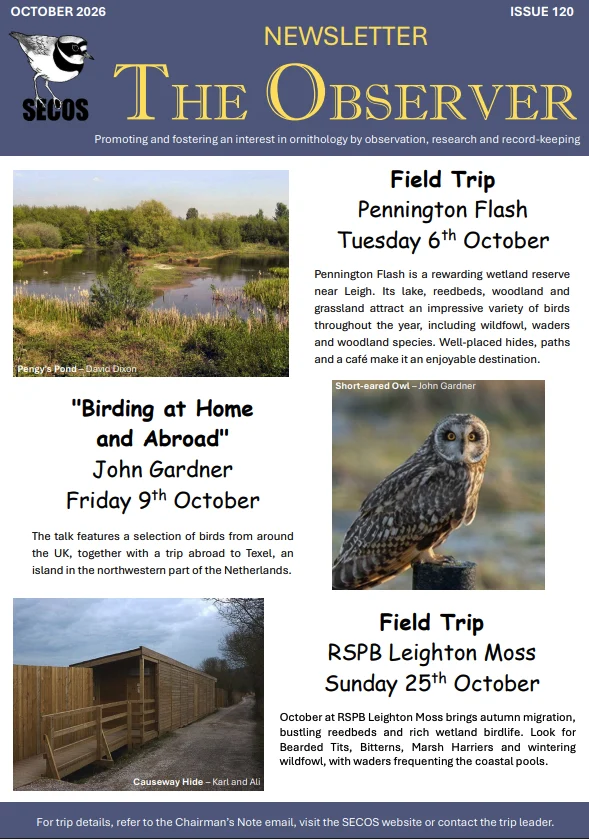
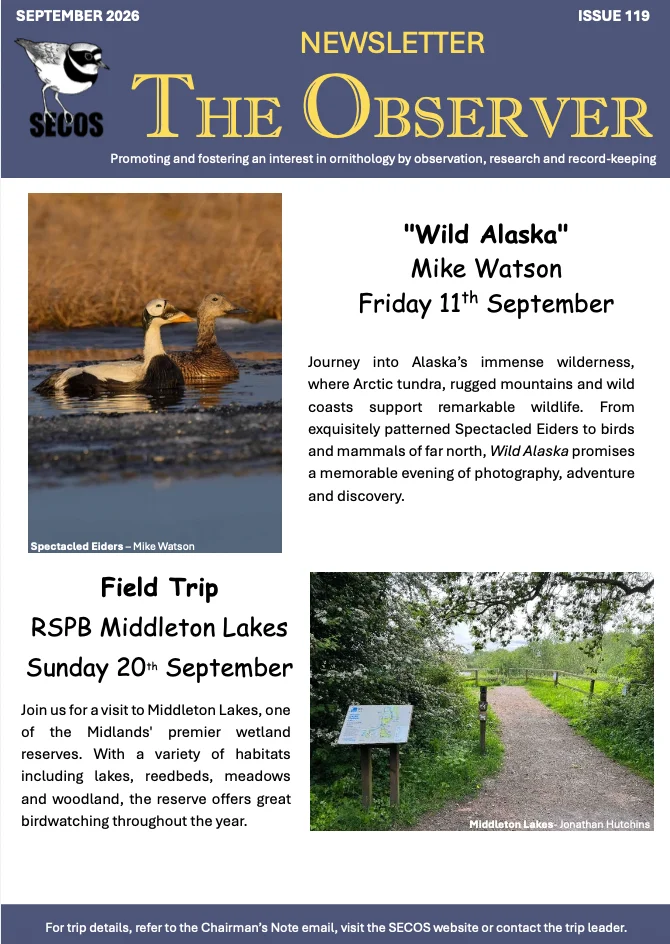
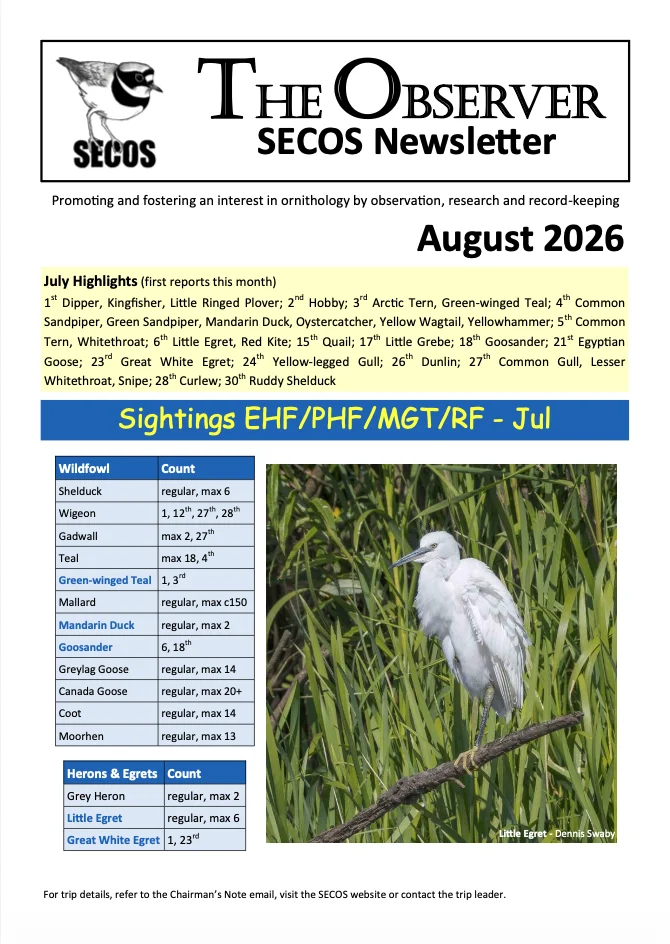
- SECOS. The South East Cheshire Ornithological Society has kept log books and reports for the area for decades. Its monthly reviews appear on our blogs page.
- Surveys. If you enjoy counting, the BTO’s Wetland Bird Survey (WeBS) needs monthly counts of waterbirds at sites just like the Flashes.
Rare birds: what to do
If you find something unusual, get the news out quickly so others can enjoy it, unless it’s a sensitive breeding species. Take photos, even poor ones, and write notes on the spot before you check a field guide. Then submit a full record. A sighting nobody can check is a sighting lost.
Make it fun
Set yourself a year-list target. Join the friendly rivalry over who finds the next new bird for the Flashes. Keep a “self-found” list. And look back through the Birds of Sandbach Flashes books to see how your patch has changed.