Sandbach Flashes: birds and wildlife
Why join SECOS? South-East Cheshire Ornithological Society
If you watch birds at the Sandbach Flashes, the South-East Cheshire Ornithological Society (SECOS) is the club to join. For £16 a year you get a winter season of talks in Sandbach, a field trip every month, local walks, a monthly newsletter and a direct line into the area’s bird records. Under-18s join free.
SECOS was born at the flashes. It was founded in 1964, when the site was already known for its birds and regular visitors encouraged local birdwatchers to form a society. More than 60 years on it has around 130 members, and its records are still the backbone of what we know about birds on the patch.
What you get
Membership buys a full year of birding: about eight talks, ten days out, local walks and the newsletter. You pay your own way to field trips, but the programme itself comes with the subscription.
Talks on Friday nights. From September to April, SECOS meets on the second Friday of the month at 7.30 pm, at Ettiley Heath Church Community Centre in Sandbach. Speakers are ornithologists, conservationists and wildlife photographers. Topics for 2026–27 include Iceland, the Falklands, winter birding in Japan and A North West Year. The season ends in April with the AGM and a members’ evening. The meetings are as much social as educational, and the easiest way to get to know other local birders.
Monthly field trips. One Sunday a month from September to June, members travel together to a top site. This season’s list includes RSPB Leighton Moss, the Wirral, Carsington Water, WWT Martin Mere, the North Wales coast and RSPB Burton Mere Wetlands. There’s also a long weekend in Dumfries and Galloway in March and a short break in West Wales in June. Groups are small and friendly, and beginners are as welcome as experts.
Closer to home. The First Tuesday Group holds a local walk on the first Tuesday of each month, and there are evening walks in summer.
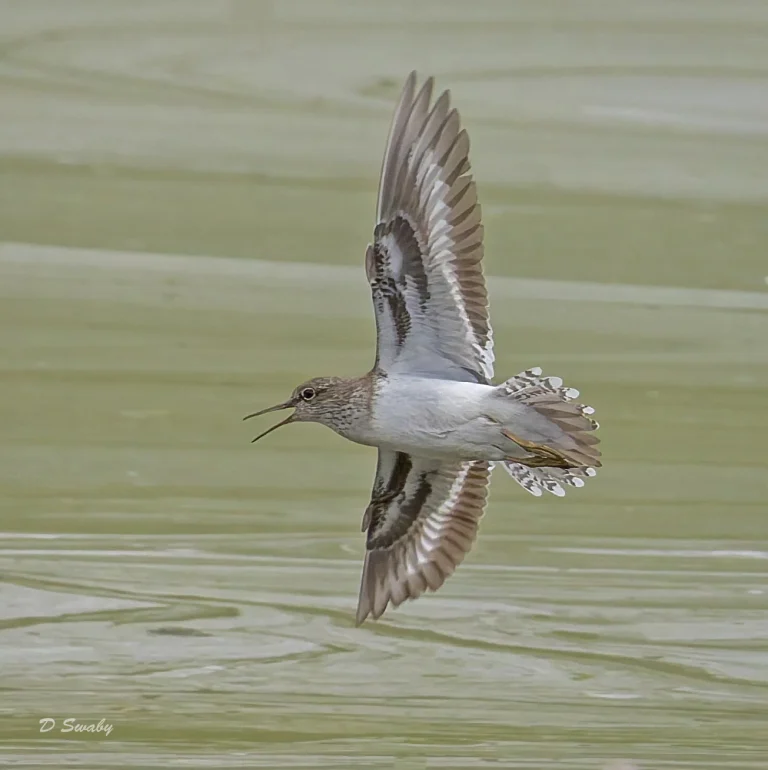
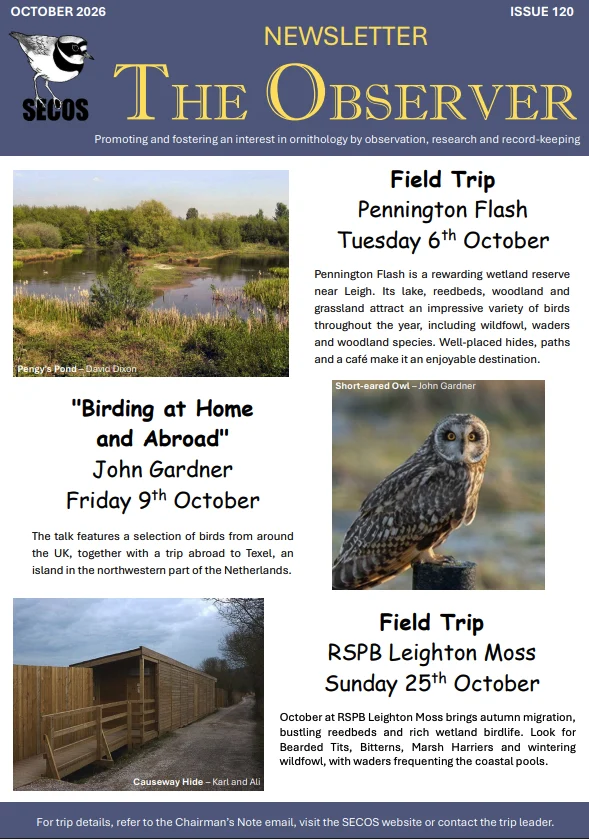
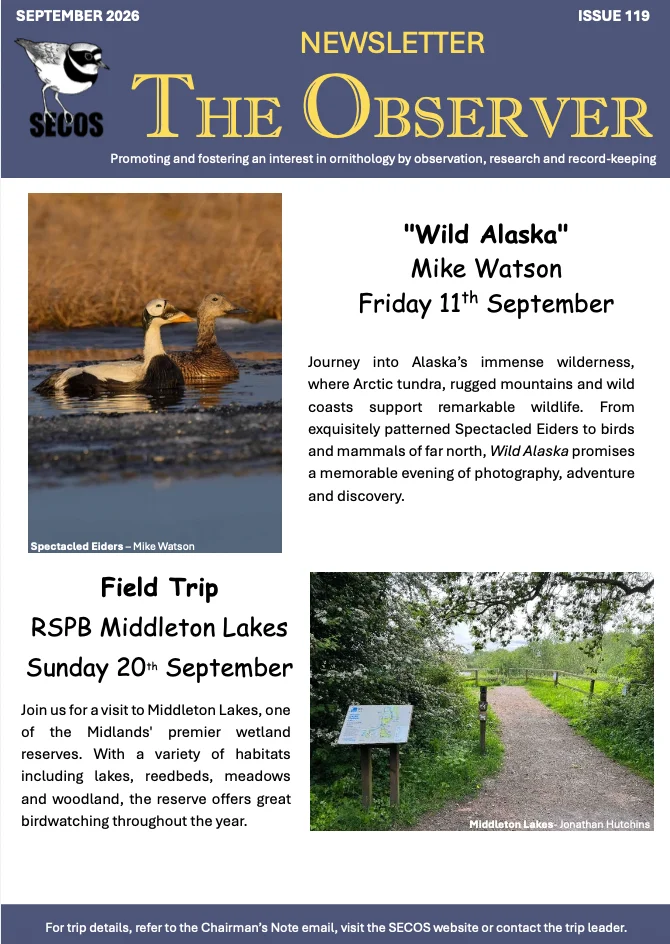
The Observer. The society’s monthly newsletter brings the month’s sightings from the flashes and the wider area, trip reports and news of what’s coming up. Recent issues covered the Wood Sandpiper and Willow Tit in August and the Goshawk at Elton Hall Flash in September.
Local know-how. SECOS publishes site guides to the recording area, annual reports for sites like Doddington Pool and Rode Pool, and books on the birds of the flashes. It also owns a hide at Rode Pool, and members can visit Doddington Pool.
Why it matters for the flashes
SECOS is the society that records the birds of the Sandbach Flashes. Its recording area covers the 10 km squares SJ74, 75, 76, 85 and 86, which take in Sandbach, Crewe, Alsager and Congleton, with the flashes at the heart of it.
When you send your sightings to SECOS, they don’t vanish into a spreadsheet. Each month they make up the sightings pages of The Observer, go up on the SECOS website, and are entered into BTO BirdTrack, the national database. That is how a record like September’s Goshawk can be checked against earlier flashes records, and how the society can say the August Willow Tit was the first since 2014. Every record you add makes that picture more complete.
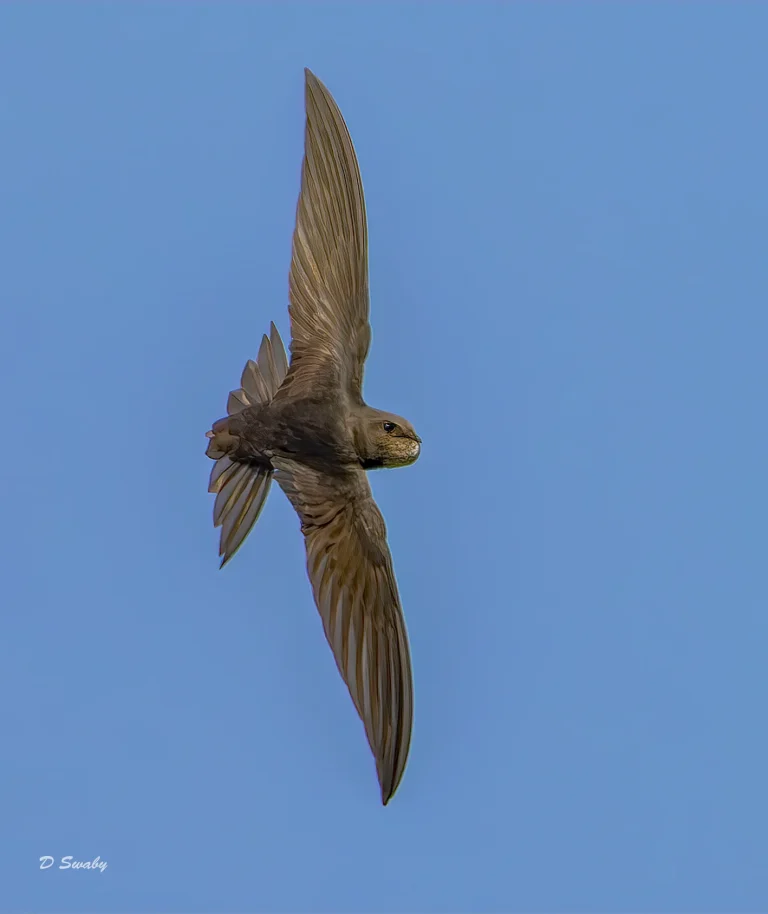
Members also get stuck into practical surveys: a winter garden bird survey, a winter and breeding bird survey of the area, Swift counts, and nest recording at Quakers Coppice in Crewe. Results feed into county work by CAWOS and national studies by the BTO.
For news as it happens, SECOS runs a WhatsApp group, SECOS Area Birds, so you hear about a Wood Sandpiper on Elton Hall Flash while it’s still there. The SECOS website also has detailed guides to the north, central and south areas of the flashes, which are ideal if you’re new to the patch.
Who it suits
SECOS suits almost anyone who birds in south-east Cheshire, but it’s best value for three kinds of people:
- Beginners, who learn fastest by birding alongside experienced people on trips and walks.
- Regular flashes watchers, whose records count for more when they go into the society’s monthly reports and BirdTrack.
- Anyone wanting company, as Friday talks and Sunday trips are an easy way into a friendly group of local birders.
A few things are worth knowing before you sign up. Most talks are in person on Friday evenings in Sandbach, though one this season is on Zoom. Field trips mean making your own way there, often an hour or more away. Much of the sightings information is free on the SECOS website, so membership is really about the people, the trips and supporting local recording.
If you’re unsure, go to a talk first. Visitors are welcome for £3.
How to join
Membership for the 2026–27 season costs £16 for one person or £28 for two, and anyone under 18 joins free. The year runs to 31 August, and new members joining between January and April pay less.
| Joining | Individual | Joint |
|---|---|---|
| September to December | £16 | £28 |
| 1 January to 30 April | £10 | £18 |
| 1 May to 31 August (valid to the end of the next season) | £16 | £28 |
| Under 18 | Free | — |
To join, download the membership form from the Join SECOS page and post it to the Membership Secretary at the address on the form. The next talk is Icelandic Birding by Paul Hill on Friday 13 November 2026, at 7.30 pm at Ettiley Heath Church Community Centre, Elton Road, Sandbach, CW11 3NE. The next field trip is to the Wirral on 22 November.
Once you’ve joined, send your flashes sightings to SECOS through the Reporting page, and follow the society on Facebook.
Sources
- SECOS home page
- Join SECOS: benefits and 2026–27 fees
- Information about SECOS: history, recording area and meetings
- Indoor meetings and Field trips: 2026–27 programme
- Reporting: how records are used
- The Observer, issues for August, September and October 2026